Gabriela Latowicka5 min read
Silicone Scar Sheets: Why Are They So Effective After Surgery?
Discover how silicone scar sheets help improve surgical scars after tummy tuck, breast surgery and facelift. Learn when to start and how to use them.
Silicone Scar Sheets: Why Are They So Effective After Surgery?
The Importance of Proper Scar Care and Post-Surgical Recovery
Every surgical procedure leaves a scar, but how that scar develops and matures depends on several factors, including your skin type, genetics, surgical technique, and most importantly, proper aftercare.
Whether you've undergone a tummy tuck, breast augmentation, breast lift, facelift, or another surgical procedure, taking care of your incision after surgery is an essential part of your recovery journey.
One of the most widely recommended, non-invasive treatments for surgical scar management is medical-grade silicone scar sheets.
But what makes them so effective, and when should you start using them?
What Are Silicone Scar Sheets?
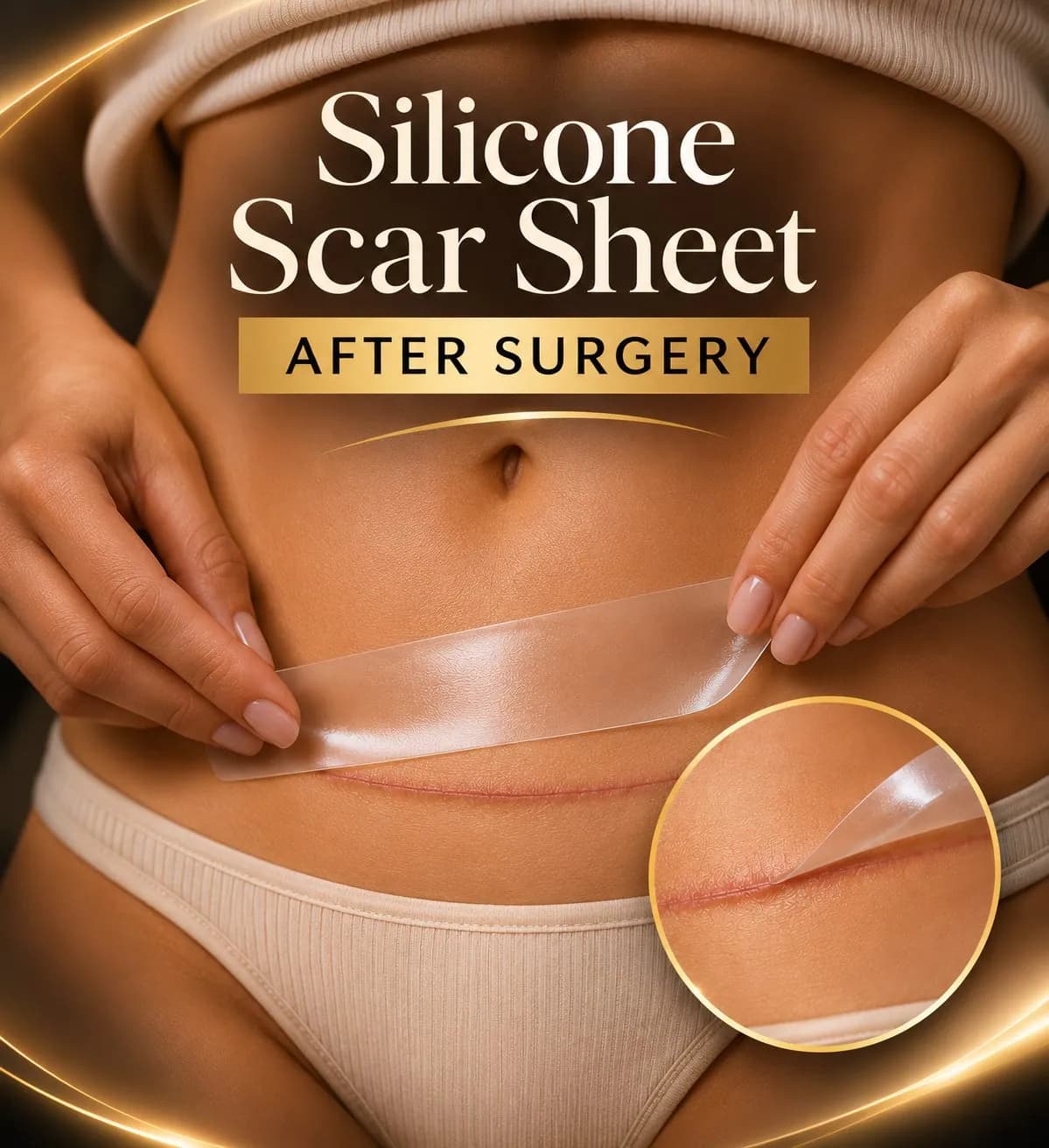
Silicone scar sheets are thin, flexible, medical-grade silicone dressings designed to cover healed surgical incisions and support the natural scar maturation process.
They create a protective layer over the skin, helping maintain hydration and regulate the environment around the developing scar.
Silicone-based treatments are widely recognised as a first-line option for managing and preventing hypertrophic (raised) scars.
Unlike ordinary moisturisers or cosmetic creams, silicone sheets provide prolonged contact with the skin, helping support scar management over several months.
5 Benefits of Silicone Scar Sheets
1. Help Flatten and Soften Raised Scars
One of the main benefits of silicone scar sheets is their ability to improve scar texture.
As surgical scars heal, excess collagen production can sometimes cause the scar to become thick, firm, or raised.
Consistent silicone treatment can help soften and flatten these scars, making them smoother and less noticeable over time.
2. Reduce Redness and Improve Scar Appearance
Fresh surgical scars often appear pink, red, or darker than the surrounding skin.
This is a normal part of the healing process, and scar colour usually changes gradually as the tissue matures.
Silicone scar sheets may help reduce redness and improve the overall appearance of the scar.
However, results vary depending on the individual's skin, the type of scar, and how consistently the treatment is used.
3. Maintain Hydration and Support Scar Maturation
Hydration plays an important role in healthy scar development.
Silicone sheets create a semi-occlusive protective barrier that helps reduce moisture loss from the skin.
This controlled environment supports the skin's natural healing and scar maturation processes.
Maintaining appropriate hydration may also help regulate excessive collagen production, which contributes to raised scars.
4. Help Prevent Excessive Scarring
Some individuals are more prone to developing hypertrophic scars, particularly after procedures involving longer surgical incisions.
These scars may become raised, thickened, or uncomfortable.
Silicone sheets can help reduce the risk of hypertrophic scarring when introduced at the appropriate stage of healing.
They may also improve existing raised scars, although they cannot guarantee complete prevention or removal of scarring.
5. Support Long-Term Scar Management
Scar healing doesn't stop when the incision closes.
In fact, surgical scars continue to remodel and mature for many months, sometimes taking 12–18 months or longer to reach their final appearance.
Regular use of silicone scar sheets can support this process, helping scars gradually become softer, flatter, and less visible.
Consistency is one of the most important factors in successful scar management. When Should You Start Using Silicone Scar Sheets After Surgery?
This is one of the most common questions patients ask.
Silicone scar sheets should only be introduced once:
The surgical incision is completely closed.
The skin has healed, with no open areas or drainage.
Any scabs have naturally resolved.
Your surgeon has confirmed that silicone treatment is appropriate.
Never apply silicone sheets directly to open wounds, infected incisions, or areas that have not fully healed.
The exact starting point varies depending on the procedure and your individual recovery.
How Long Should You Wear Silicone Scar Sheets?
The recommended wearing schedule depends on the product and your skin's tolerance.
Many medical-grade silicone sheets are designed for prolonged daily wear, often around 12–24 hours, depending on the manufacturer's instructions.
For scar management, treatment is commonly continued for at least 2–3 months, and sometimes longer.
It is important to introduce the product gradually if recommended, keep the skin clean and dry before application, and stop using it if significant irritation develops.
Remember, silicone scar sheets are not an overnight solution. Visible improvement takes time.
Silicone Scar Sheets After Different Surgical Procedures
Silicone sheets may be particularly beneficial after procedures such as:
Tummy Tuck (Abdominoplasty)
Abdominoplasty usually involves a long incision across the lower abdomen. Proper scar management may help improve the texture and appearance of this scar as it matures.
Breast Augmentation, Breast Lift and Breast Reduction
Breast surgery may leave scars beneath the breast, around the areola, or vertically along the breast, depending on the technique used.
Silicone treatment can be incorporated into an appropriate post-operative scar care routine once the incisions have healed.
Facelift and Neck Lift
Facial surgery often involves carefully positioned incisions around the ears and hairline.
Although these scars are designed to be discreet, appropriate aftercare can help support their long-term appearance.
Other Surgical Procedures
Silicone scar sheets may also be useful after other operations that leave fully healed surgical incisions, provided the treating clinician considers them suitable.
Can Silicone Scar Sheets Completely Remove Surgical Scars?
No treatment can guarantee the complete removal of a surgical scar.
The goal of silicone therapy is to improve the scar's appearance, texture, thickness, and overall quality.
Final results depend on several factors, including genetics, skin characteristics, surgical technique, wound healing, and adherence to post-operative recommendations.
For some scars, additional treatments such as professional scar therapy, laser treatment, or other medical interventions may be appropriate.
Why Proper Aftercare Matters
At Signature Surgery by Comfort Zone, we believe that successful surgical results don't end in the operating room.
The recovery process, wound care, and long-term scar management are all important parts of the overall surgical journey.
Even when surgery is performed using advanced techniques, your body still needs time to heal and remodel the tissues.
Following your surgeon's instructions, protecting your incisions, and introducing appropriate scar care at the correct stage can make a meaningful difference to your recovery experience.
Beautiful surgical results deserve proper aftercare.
Final Thoughts
Silicone scar sheets are a simple, non-invasive, and evidence-supported option for managing surgical scars.
They can help maintain hydration, soften raised scars, improve scar texture, and reduce the risk of excessive scarring.
However, patience and consistency are essential.
Scar maturation is a gradual biological process, and the best results often develop over several months.
Always consult your surgeon before introducing any new scar treatment following surgery.
General information from a manual therapy studio, not medical advice, and no replacement for it. Always follow the instructions provided by your surgeon or medical team.